
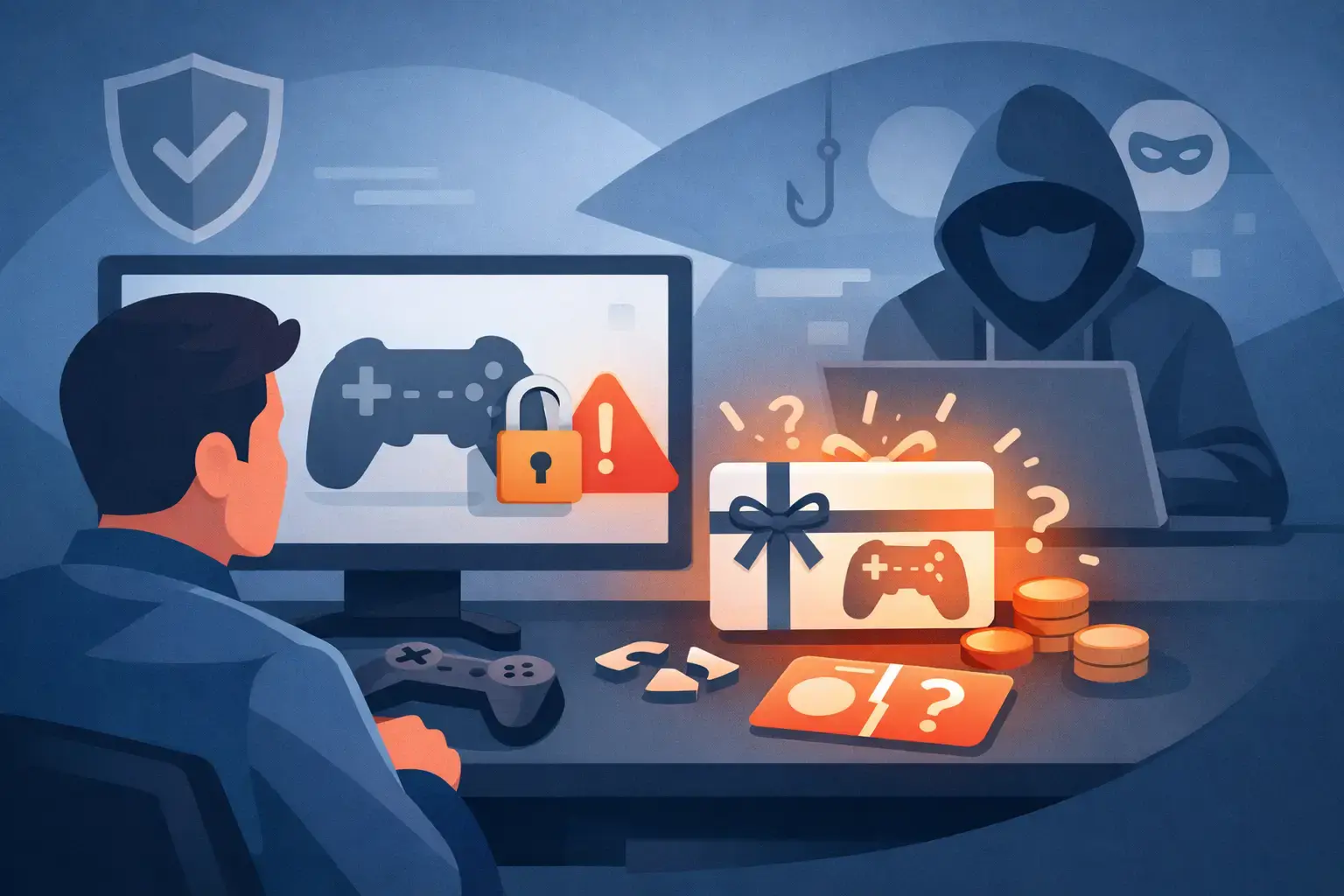
A code that promises instant currency, a premium skin, early access, or a rare bundle can disappear faster than a bad teammate after the match ends. Learning how to avoid fake game codes protects more than your money. It protects your game account, your payment details, and the time you would spend trying to recover from a scam.
Fake codes are common because digital products move fast. There is no package to inspect, no shipping delay, and often no way to reverse a redemption once a code has been used or exposed. That makes careful buying part of the process, whether you are looking for official game currency, subscriptions, DLC, beta access, or software from a specialized gaming marketplace.
Why Fake Game Codes Are So Convincing
Most scams do not look like scams at first. They borrow the language gamers expect to see: instant delivery, limited stock, exclusive drops, private access, and huge discounts. A listing may even use official-looking cover art, copied product descriptions, and reviews that seem real at a glance.
The pressure is usually the giveaway. A seller may claim that only a few codes remain, tell you to pay outside the marketplace, or insist that you must act before a timer expires. Real promotions can be limited, but trustworthy sellers do not need to rush you into skipping basic checks.
The other reason fake codes work is that buyers may confuse a legitimate-looking code with a legitimate source. A string of characters is not proof of value. The real question is where it came from, whether it is authorized for your platform and region, and whether the seller has a clear process if the code fails.
How to Avoid Fake Game Codes Before You Buy
Start by checking the seller, not the discount. A price far below the normal market rate is not automatically fraudulent, but it should make you slow down. Digital inventory has costs. If a brand-new release, major currency pack, or high-demand item is listed at a fraction of its normal price with no explanation, assume there is a catch until the seller proves otherwise.
A credible marketplace makes its business details easy to find. Look for clear product descriptions, supported platforms, regional restrictions, delivery expectations, payment options, refund rules, and a way to contact support. Vague listings such as “works everywhere” or “guaranteed forever” are often designed to avoid accountability.
Read the details closely before checkout. A genuine code can still be useless if it is intended for another country, console family, store region, or game edition. For example, a PC code may not work on a console account, and a US redemption code may not activate on an account registered elsewhere. This is not necessarily a scam, but unclear compatibility information is a reason to choose another seller.
Use a payment method with transaction records and buyer protections. Avoid sellers who request cryptocurrency only, gift cards, direct transfers, payment-app “friends and family” transfers, or payment through a random chat account. Those methods can make disputes difficult or impossible. Secure checkout is not just convenient. It gives you a record of what was purchased, when it was delivered, and who processed the payment.
Red Flags That Should Stop the Purchase
A single red flag may have an innocent explanation. Several together usually mean you should leave the page. Watch for these warning signs:
- Prices that are unrealistically low for new, rare, or limited digital items
- Requests to send payment outside the listed checkout process
- Sellers who ask for your game login, email password, two-factor code, or recovery code
- Product descriptions filled with promises but missing platform, region, and refund details
- Newly created social accounts with copied images, generic comments, or no real customer history
- Screenshots of “proof” that can be edited easily instead of clear order and delivery information
- Messages claiming a code must be redeemed through an unfamiliar website before it can work
Never give a seller access to your account to “activate” a code. Legitimate game codes are redeemed through the official platform or store. If someone needs your login, they are not selling a normal code. They may be trying to take the account, change the recovery email, use stored payment details, or collect information for later fraud.
Be equally careful with code generators. Sites and videos that claim to generate unlimited premium currency or free store codes are almost always traps. At best, they waste your time with surveys, ad redirects, and downloads. At worst, they push malware, steal browser data, or ask you to sign in through a fake account page.
Verify the Product Without Exposing Your Account
Before redeeming anything, compare the code type and instructions with the game publisher or platform’s standard redemption process. You do not need to click unfamiliar links to do this. Official platforms have established redemption areas inside their apps, launchers, consoles, or websites.
If the code arrives by email, inspect the message carefully. Check whether the sender address matches the marketplace you used, whether the order number matches your receipt, and whether the message is pushing you toward a third-party login page. A professional delivery email should confirm the purchase and provide the code or straightforward instructions. It should not ask you to disable security features or share personal information.
Keep screenshots of the listing, order confirmation, delivery message, and any conversation with support. This takes less than a minute and can make a major difference if a code is invalid, already redeemed, or not as described. Good records also help legitimate support teams resolve problems faster.
Redeem codes promptly, but do it only through the correct official channel. Waiting too long can complicate a dispute if a seller claims the code was delivered successfully. On the other hand, do not rush because a seller tells you the code will “expire in five minutes” unless that expiration is clearly stated by the actual publisher.
Protect Your Account From the Bigger Scam
A fake game code is often the first step, not the final goal. Scammers may use free-code offers to collect passwords, account IDs, payment details, or session information. Your account security should be set up before you browse for deals.
Use a unique password for your game account and turn on two-factor authentication. An authenticator app is generally stronger than text-message verification, although either option is better than having no second layer at all. Do not reuse your game password for email, Discord, forums, or storefronts. If one account is compromised, reused passwords turn one problem into several.
Be cautious when downloading files that supposedly reveal or activate a code. A normal digital code does not require an executable file, browser extension, “verification tool,” or security exception. This applies especially to files sent through direct messages, Discord servers, Telegram groups, and comment sections. If the product is software rather than a simple redemption code, use an established marketplace with clear delivery instructions, product information, and support rather than an anonymous file host.
For gaming tools, compatibility and account risk matter as much as price. Products that claim impossible guarantees or provide no update information can leave buyers with unusable software, security concerns, or account issues. Read platform rules and understand the consequences before using any third-party tool. A seller can be legitimate while a particular use still conflicts with a game’s terms of service.
What to Do If You Bought a Fake Code
Act quickly, but do not panic. First, stop communicating with the seller if they are asking for more money, personal information, or account access. Do not install any file they send as a “fix,” and do not let them remotely access your device.
Save all evidence, including the listing, payment receipt, code, delivery email, and chat messages. Contact the marketplace or payment provider through its official support channel and explain the problem clearly: whether the code was invalid, already used, region-locked despite the listing, or never delivered. If you entered account details on a suspicious site, change your password immediately, sign out of other sessions, and review your recovery email and two-factor settings.
If you downloaded a suspicious file, run a trusted security scan and remove the file. Review browser extensions and saved passwords as well. For a compromised payment card, contact the card issuer directly using the number on the card or its official app.
Buy for Reliability, Not Just the Lowest Price
The safest deal is not always the cheapest one. It is the one with accurate product details, secure payment, transparent policies, and support that can respond when something goes wrong. Platforms such as Zadeyo are built around structured product listings and customer support because digital purchases need more than a code pasted into a message.
Good buying habits do not make gaming less fun. They keep a quick purchase from becoming a lost account, a disputed charge, or a device cleanup. Pause when a deal feels too perfect, verify the seller before paying, and redeem only through the official path. That small amount of caution keeps your next game purchase where it belongs: in your library, not in a scammer’s inbox.