
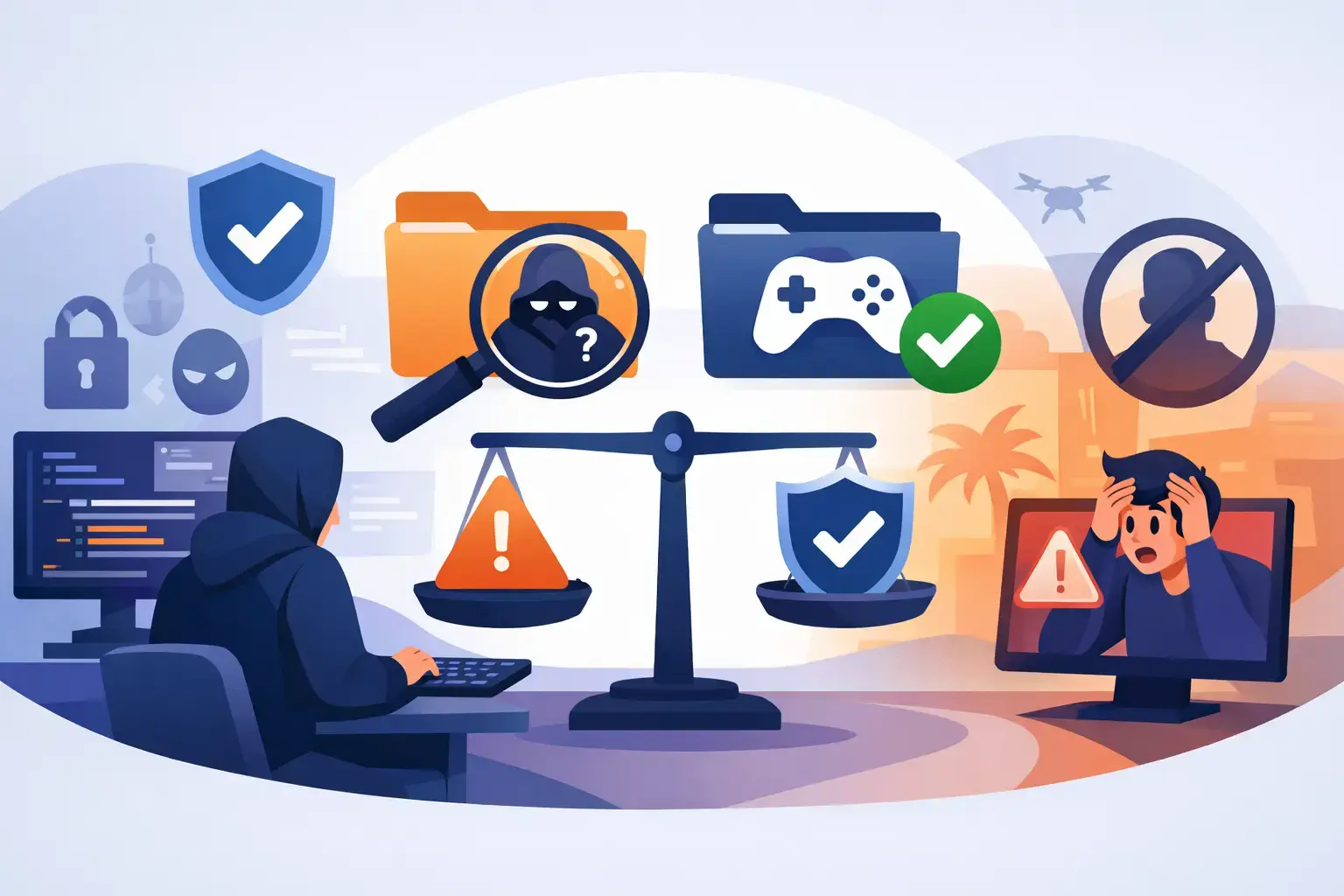
A cheat labeled “undetected” can look like the easy answer when you are stuck, facing stronger opponents, or tired of grinding. But if you are searching for how to choose undetected cheats, the first thing to understand is that no seller can honestly guarantee permanent safety from a game’s anti-cheat systems.
Detection changes constantly. Game publishers update their protections, investigate unusual behavior, and can take action long after software was used. The real decision is not which tool has the boldest claim. It is whether the risk to your account, device, payment details, and gaming reputation is worth taking at all.
Why “Undetected” Is Not a Permanent Status
Undetected is a temporary marketing claim, not a lifetime promise. A tool may not be flagged at the moment a seller posts it, yet a later game update or anti-cheat review can change that without warning. Some enforcement is immediate, while other enforcement happens in delayed waves. That delay can create a false sense of security.
There is another issue: different games and platforms enforce their rules differently. A modification that appears to work in one title may trigger action in another. Competitive games, ranked modes, and games with active server-side monitoring often carry higher account risk. Even a fresh account is not a consequence-free test. Hardware, behavior patterns, connected accounts, and payment history may all matter depending on the publisher’s systems and policies.
Treat every “100% safe” or “never detected” claim as a red flag. Honest software discussions acknowledge changing conditions, game terms, and the possibility of enforcement. Absolute promises are designed to reduce hesitation, not to protect the buyer.
How to Evaluate Undetected Cheat Claims Safely
The safest approach is to avoid software meant to bypass anti-cheat protections or gain an unfair advantage in online play. If you are evaluating a marketplace, community post, or digital product claim, focus on signs of legitimacy and personal security rather than promises of invisibility.
Start with transparency. A credible digital seller should clearly explain what a product does, what game version it supports, what support is available, and what happens if a product stops functioning. Vague feature lists, copied screenshots, and pressure to buy immediately are not confidence signals.
Next, look at the seller’s policies. Clear refund terms, support expectations, account rules, and payment information help you understand what you are actually purchasing. Missing policies do not prove a scam, but they leave you with little recourse when access disappears or software does not match its description.
Community feedback can be useful, but it needs context. A stream of short comments saying “works” proves very little. Look for feedback that discusses support quality, update communication, billing reliability, and whether the seller handled problems responsibly. Be cautious with testimonials hosted only by the seller, especially if every review uses the same wording or appears within a narrow date range.
Protect Your Device and Personal Information
The immediate risk is not always a ban. Unverified downloads can expose your system to malware, credential theft, browser hijacking, crypto-mining software, or remote access tools. Gaming accounts are valuable targets because they may contain purchases, linked payment methods, friend lists, and years of progress.
Never disable security tools just because a download instructs you to do so. Some legitimate programs can create false positives, but “turn off all protection” is also one of the oldest tactics used to get harmful software onto a device. If a file asks for broad administrator access without a clear, verifiable reason, stop and reassess.
Keep separate, strong passwords for your gaming platform, email account, and payment services. Enable multi-factor authentication wherever it is offered. Your email account deserves special attention because it is usually the recovery path for everything else. If someone gains control of it, they can reset more than a game login.
Be equally cautious with payment requests. Avoid sellers who push irreversible payments, personal transfers, gift cards, or cryptocurrency as the only option. Those methods can make disputes difficult and are commonly used by scammers because buyers have limited protection after funds are sent.
The Cost of a Ban Is Usually Bigger Than One Match
A ban can mean more than losing access to a single game. You may lose paid content, cosmetics, competitive rank, seasonal progress, and access to communities you have spent years building. Some publishers also restrict linked accounts or hardware, making a return more complicated than simply creating another profile.
There is a social cost as well. Competitive games depend on trust. When players believe a lobby is unfair, matches become less enjoyable for everyone, including the person using the advantage. A short-term boost can turn into a frustrating cycle of avoiding scrutiny, replacing accounts, and losing the satisfaction that comes from real improvement.
For developers, testers, and mod creators, there is an important distinction between authorized testing and live-service manipulation. Use official development environments, private servers, approved modding tools, and sandboxed test builds when they are available. Permission and scope matter. Testing your own software in a controlled environment is not the same as altering a public competitive match.
Better Ways to Get an Edge
If your goal is to perform better, there are options that do not put your account at risk. The best one depends on the game and the reason you feel stuck.
For aim-heavy games, work on sensitivity consistency, crosshair placement, and replay review. A small adjustment to settings followed by several sessions of practice is more useful than constantly changing every option after a bad match. If you are losing gunfights, identify whether the issue is reaction time, positioning, movement, or decision-making before blaming your setup.
For strategy, survival, and multiplayer games, knowledge creates a durable advantage. Learn maps, rotations, economy choices, cooldown timing, objective priorities, and common opponent habits. These skills transfer from match to match and cannot be removed by an update.
Accessibility tools are another legitimate path when available. Many modern games provide options for remapping controls, changing text size, adjusting color settings, reducing motion, adding audio cues, or tailoring input behavior. Use the settings supported by the game and platform. They are designed to make play more comfortable without compromising competitive integrity.
You can also choose modes that match what you want from a session. Casual playlists, custom matches, co-op modes, single-player trainers, and officially supported mod communities can offer experimentation without turning every match into a high-stakes account risk.
A Better Standard for Gaming Software
Premium service is not just a fast download or a polished product page. It includes honest limits, clear policies, dependable support, secure handling of customer information, and respect for the rules of the games people play. Any seller that treats bans, security warnings, or account loss as someone else’s problem is showing you exactly where its priorities are.
Before installing any gaming-related software, ask one practical question: if this goes wrong tonight, can I afford to lose this account and trust this file on my computer? If the answer is no, keep your system protected, use authorized tools, and put your time into improvements that still belong to you after the next update.