
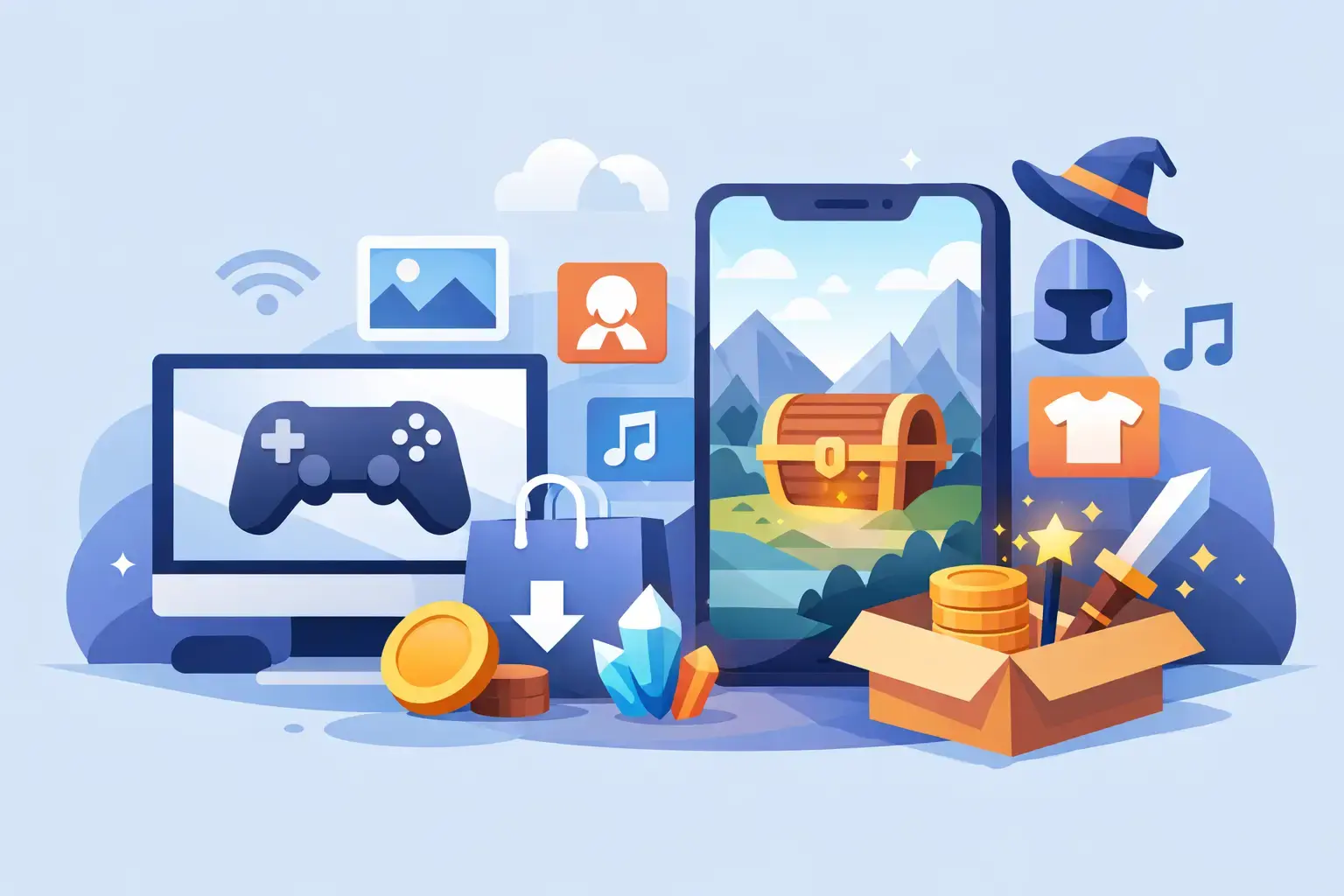
A lot of gamers run into the phrase what is digital goods game when they are buying software, add-ons, accounts, boosts, or in-game tools online. The wording can look awkward, but the meaning is usually simple. It refers to a game-related product that is delivered digitally instead of physically.
That means no box, no disc, and no shipping delay. You pay, receive access or files, and use the product right away if the marketplace is set up properly. For buyers who care about speed, privacy, and instant delivery, that difference matters.
What is digital goods game in plain terms?
A digital goods game product is any game-related item sold and delivered online. Sometimes it is the game itself, like a downloadable PC title or console code. Other times it is a digital product connected to a game, such as DLC, in-game currency, premium items, accounts, mods, private tools, or software used to change how the game is played.
The key point is delivery. If the item is purchased online and fulfilled through a key, file, login, activation code, or account access, it falls under digital goods. In gaming marketplaces, that category can be broad because players buy more than just the base game.
For example, one buyer may purchase a Steam key. Another may buy a mod menu, a cheat subscription, or spoofing software. A third may pick up a cosmetic bundle or in-game credits. All of these are digital goods, but they serve very different goals.
Why the term confuses people
The phrase itself is not clean English, which is why people search it. Most platforms, sellers, and marketplaces mean one of two things. They either mean digital goods for games, or they mean game digital goods.
That small wording issue creates a lot of confusion, especially for first-time buyers. Someone may wonder whether the term refers only to full games, only to in-game items, or to any downloadable gaming product. In practice, sellers often use it as an umbrella term for all non-physical gaming products.
So if you see the category on a marketplace, think broad. It usually covers any product related to gaming that can be delivered online without shipping.
What counts as a digital good in gaming?
The category is wider than most people expect. Full game downloads are the obvious example, but the market goes much further. A digital gaming product can include activation keys, downloadable content, season passes, skins, in-game currency, premium accounts, save files, boosting services, private scripts, cheats, and spoofers.
That last group is especially relevant for players who want more control over their setup. Some digital products are built for convenience, some for status, and some for performance. A cheat tool or spoofing solution is still a digital good because it is software or access delivered electronically.
This is where buyers need to read listings carefully. Two products may both sit in the same category, but one could be a one-time license while the other is a subscription. One may be instant-use software, while another requires setup steps, loader updates, or hardware compatibility checks.
How digital goods are usually delivered
Delivery is one of the main selling points. A strong marketplace is built around instant fulfillment, secure checkout, and clear post-purchase instructions. Depending on the product, delivery can happen through email, account dashboard access, license keys, download files, or member-area activation.
For simple products, the process is fast. You buy, receive your code or file, and start using it. For more advanced gaming software, the process may include authentication, installation steps, or version matching with the current state of the game.
That difference matters because not every digital good is plug-and-play. Buyers looking for cheats, private tools, or spoofers should expect a more technical setup than someone redeeming a game code. That is normal. Good sellers make that clear before purchase, not after.
What buyers are actually paying for
When people hear digital goods, they sometimes assume they are paying for a file. That is only part of the value. In gaming, the purchase often includes access, updates, support, and reliability.
Take a standard game key. You are paying for a valid license to access the game. Take a premium software tool. You may be paying not only for the loader itself, but also for continued maintenance, update support, compatibility work, and customer assistance if something changes after a game patch.
That is why prices can vary so much across similar-looking products. One seller may offer a bare file with no support. Another may provide a maintained product with active updates and customer service. On paper they are both digital goods. In real use, they are not the same product experience.
What is digital goods game shopping like for cheat and spoofer users?
For this audience, digital goods shopping is less about buying a game and more about buying performance, access, and stability. A player is often looking for software that works now, stays updated, and does not create unnecessary risk.
That changes what matters during purchase. Instant delivery is still important, but so are product status, compatibility, update frequency, and support response times. If a cheat or spoofer is outdated, poor delivery speed does not help much. Buyers in this space care about whether the product is actively maintained and whether the marketplace is organized enough to set expectations clearly.
This is one reason structured platforms stand out. If categories are clean, policies are visible, and product details are direct, users can make faster decisions. That removes guesswork and lowers the chance of buying the wrong tool for the wrong game version or system setup.
The benefits of digital game goods
The biggest benefit is speed. There is no shipping delay, no inventory shelf, and no waiting for a physical product to arrive. If the marketplace is built well, delivery is immediate.
The second benefit is access. Digital goods open the door to products that do not exist in physical form at all. That includes online services, custom software, private memberships, and game-specific tools that are maintained over time.
The third benefit is flexibility. Buyers can compare products, review features, and choose short-term or long-term access depending on how they play. Someone testing a setup may want a one-day or one-week option. A regular user may want a monthly package with support included.
The trade-offs buyers should understand
Digital goods are convenient, but they are not risk-free. The biggest issue is that quality varies. A clean listing does not always mean a solid product. That is why marketplace reputation matters.
There is also the issue of compatibility. Some products work only on certain operating systems, game versions, launchers, or hardware configurations. If a buyer skips those details, the problem may not be the product itself. It may just be a mismatch.
For software tied to live-service games, updates are another factor. A game patch can affect how a tool performs. That does not mean the product is bad, but it does mean ongoing maintenance matters more than a low entry price.
How to tell if a digital goods marketplace is worth using
The strongest platforms make a few things obvious right away. Product categories are organized. Delivery terms are clear. Support is available. Payment methods are secure. The listing explains what the buyer receives and what conditions apply.
For gaming software, especially cheats and spoofers, transparency is a serious quality signal. Buyers should be able to tell whether a product is available, updated, and intended for their game. Vague descriptions usually create support problems later.
A trusted service also avoids overselling. No serious marketplace can promise that every product will fit every setup forever. Games change. Anti-cheat systems change. Launchers change. The best sellers are confident, but realistic. That is a better sign than hype.
Why this category keeps growing
Gaming has moved heavily toward digital ownership, digital services, and digital access. Players are already used to buying downloadable games, battle passes, and in-game items. So it makes sense that related products have expanded too.
That includes third-party software and specialized tools for niche use cases. Some buyers want convenience. Some want customization. Some want an edge. The market keeps growing because digital delivery is faster, easier to scale, and easier for users to access worldwide.
For a platform like Zadeyo, that fits naturally with how gamers already shop. They want clear listings, instant access, trusted delivery, and support when setup gets technical.
The simplest way to think about it
If it is a game-related product you can buy online and receive instantly without a physical item, it is probably a digital good. The exact product could be a game key, an account, a cheat, a spoofer, DLC, or in-game content. The category is broad, but the idea is straightforward.
What separates a smart purchase from a bad one is not the label. It is whether the seller clearly explains the product, supports it properly, and delivers what the listing promises. If you keep that standard in mind, digital goods become much easier to evaluate.