
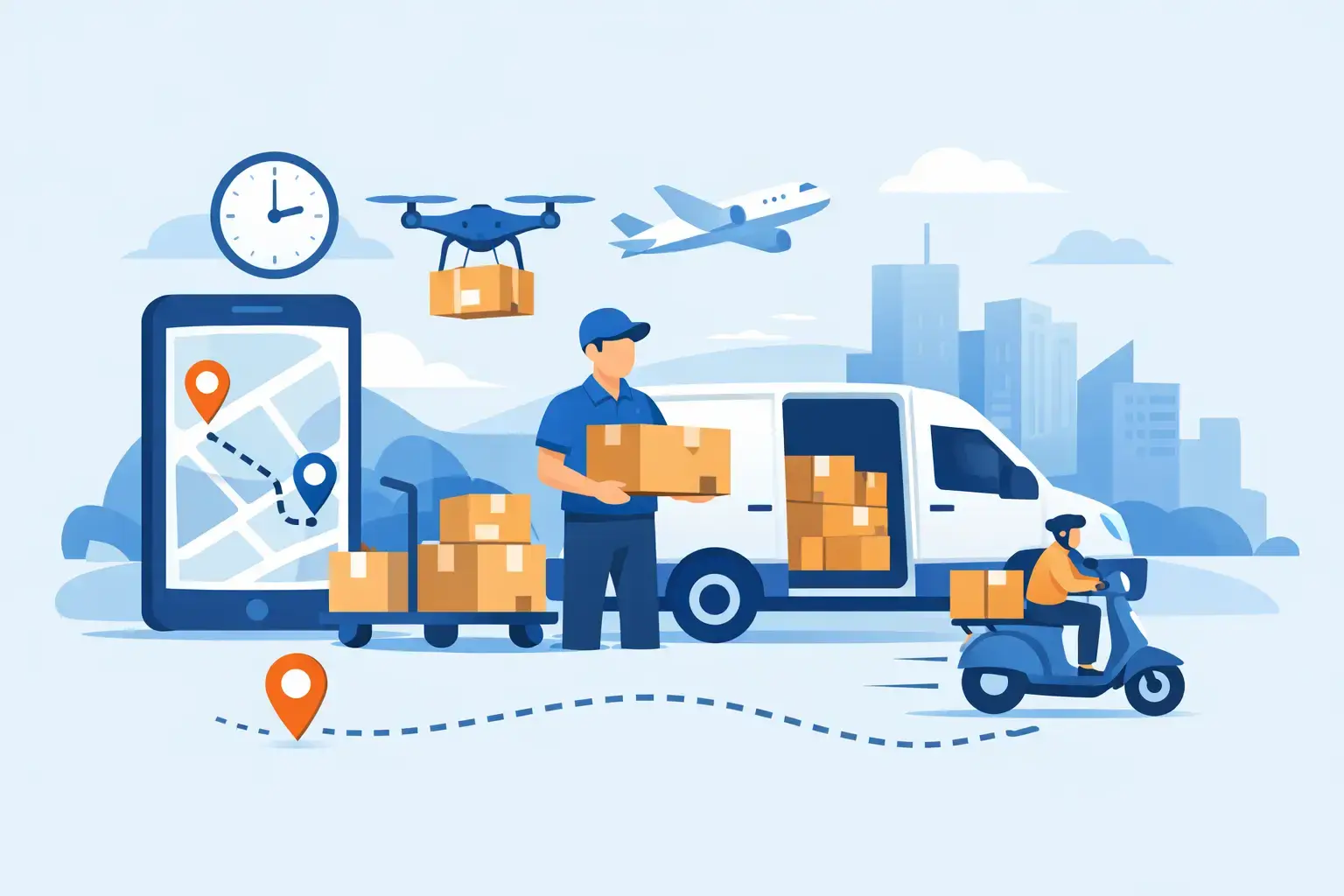
Order placed at 2:07 PM. Confirmation hits your inbox at 2:08. By dinner, the product is already in your hands. That speed is the whole point of asking, what is same day delivery? It means an order is purchased, processed, dispatched, and delivered on the very same calendar day. For buyers, it cuts waiting time to near zero. For sellers, it raises the bar on fulfillment, support, and trust.
Same day delivery sounds simple, but the details matter. Not every product qualifies, not every ZIP code is covered, and not every order placed today can realistically arrive today. The service depends on cutoff times, local inventory, courier capacity, and how quickly the seller can verify and process the purchase. That is why two stores can both advertise fast delivery while offering very different real-world experiences.
What is same day delivery?
At its core, same day delivery is a fulfillment option where the customer receives an order on the same day they place it. Unlike standard shipping, which can take several business days, or next-day delivery, which lands tomorrow, same day delivery compresses the full order cycle into a few hours.
That cycle usually includes payment confirmation, stock verification, picking, packing, dispatch, route assignment, and final drop-off. If any part of that chain slows down, the promise gets harder to keep. So when a store offers same day service, it is really selling speed backed by operational control.
For physical products, that often means the item is already stored close to the customer in a warehouse, local hub, or retail location. For digital products, the concept is even faster. Delivery may happen within minutes or hours because there is no truck involved, but there may still be order checks, account verification, or manual setup steps before access is released.
How same day delivery works in practice
Most same day systems run on tight timing. A customer places an order before a cutoff time, the seller confirms the payment, and the item is assigned to a nearby fulfillment point. From there, a local courier or delivery network handles the final trip.
That sounds straightforward, but speed depends on three things happening without friction. First, the product has to be available right away. Second, the order has to clear quickly with no fraud flags or missing customer details. Third, the delivery route has to be realistic based on traffic, distance, and courier volume.
For digital-first businesses, the flow is different but the principle is the same. The customer pays, the platform verifies the transaction, and the order is delivered through account access, download instructions, activation details, or direct support. In that environment, same day delivery is less about mileage and more about processing speed. Fast fulfillment still matters because buyers expect instant access when they purchase online.
Same day delivery vs standard and next-day shipping
The easiest way to understand what is same day delivery is to compare it with the other options shoppers see at checkout.
Standard shipping is the cheapest in many cases, but it trades speed for cost. It works fine when the purchase is not urgent. Next-day delivery is faster and more premium, but it still means waiting until tomorrow. Same day delivery is built for urgency. It is for customers who want the product now, not eventually.
That does not always make same day the best choice. If the item is low priority, paying extra for a few saved hours may not be worth it. On the seller side, offering same day on every product can create pressure, higher operating costs, and support issues if customer expectations outpace what the fulfillment network can actually deliver.
When same day delivery makes the most sense
Same day delivery is strongest when speed changes the value of the purchase. If a customer needs something immediately, getting it today is not just convenient. It is the reason they buy.
This is common with replacement items, last-minute gifts, work equipment, event-related products, and any purchase tied to a deadline. It also matters in gaming and software-adjacent markets, where users expect quick access after checkout. If someone buys a digital tool, account upgrade, or downloadable product, waiting multiple days feels outdated. Speed becomes part of the product experience.
That said, urgency is not the only driver. Some buyers choose same day because it reduces uncertainty. They know they will be home, they can use the item tonight, and they do not have to track a package for three days hoping nothing goes wrong.
What affects same day delivery speed
A lot of customers assume same day delivery depends only on distance, but that is just one factor. Inventory location is a major one. If the product is stored across the state, same day is unlikely. If it is already in a nearby local node, the odds improve fast.
Order timing is just as important. A purchase made at 9 AM has far more room for processing than one placed at 6:45 PM. That is why many businesses set clear cutoff windows. Miss the cutoff, and the order may move to next-day fulfillment even if same day is technically available in your area.
Payment review can also slow things down. High-risk orders, billing mismatches, or manual verification requirements can push an order out of the same day window. Weather, traffic, holidays, and courier demand can do the same. Even the best systems have limits.
For digital fulfillment, similar rules apply in a different form. Delays may come from account review, setup requirements, email delivery issues, or customer-side mistakes during checkout. The delivery is still fast, but not always instant.
Why same day delivery usually costs more
Speed is expensive. Same day delivery compresses labor, routing, and support into a short timeframe, so the seller has less room to batch orders efficiently. That often means higher courier fees, premium dispatch costs, or extra staffing to keep fulfillment moving.
Customers pay for priority. Sellers pay for precision. If either side treats same day as just another standard shipping method, the economics stop making sense.
This is why some platforms reserve same day delivery for specific items, order values, or supported regions. It keeps the promise credible. A trusted service would rather set realistic limits than overpromise and deal with chargebacks, complaints, or failed deliveries later.
What customers should check before choosing same day delivery
Before selecting the fastest option, it helps to read the details instead of just the headline. Same day delivery usually comes with conditions. There may be order cutoffs, geographic limits, signature requirements, or exceptions for weekends and holidays.
Customers should also check whether same day means delivered by end of day, within a few hours, or after dispatch. Those are not always the same promise. A clear delivery window matters, especially if someone is buying because the timing is urgent.
For digital orders, buyers should look at processing language. Terms like instant delivery, same day delivery, and manual fulfillment can signal very different timelines. Instant usually means automated release. Same day can still be fast, but it may allow time for verification or support handling.
What businesses gain from offering same day delivery
For sellers, same day delivery can increase conversions because it removes hesitation. A buyer comparing two offers may choose the one that arrives today even if it costs a little more. Fast delivery also creates a stronger first impression, which helps with repeat orders and brand trust.
But the upside only holds if the service is reliable. Poor same day execution can damage a brand faster than not offering it at all. Late deliveries create support tickets. Missed promises create refund requests. In competitive markets, customers remember friction.
That is why serious platforms treat fulfillment speed as part of the product, not just a checkout feature. If a business sells premium access, high-demand tools, or time-sensitive digital goods, quick processing is part of the value proposition. It signals that the operation is organized, responsive, and built for real users, not just traffic.
For a marketplace like Zadeyo, where speed, trust, and support shape the buying experience, that logic is familiar. Customers want fast access, clear expectations, and no wasted time after payment.
Is same day delivery worth it?
Sometimes yes, sometimes no. If the item is urgent, same day delivery can be the best option on the page. If the purchase is routine and price matters more than speed, standard shipping may be smarter.
The real question is not whether same day delivery is good in general. It is whether getting the product today changes the outcome for the buyer. When it does, the extra cost can be easy to justify. When it does not, fast shipping becomes more of a convenience upgrade than a necessity.
The best same day delivery services are clear about that trade-off. They set honest expectations, process orders fast, and avoid making promises they cannot keep. For customers, that means less guessing. For businesses, it means fewer problems and stronger trust.
If you are choosing between delivery options, think less about the label and more about the timeline you actually need. Fast is great, but accurate fast is what makes the purchase feel worth it.