
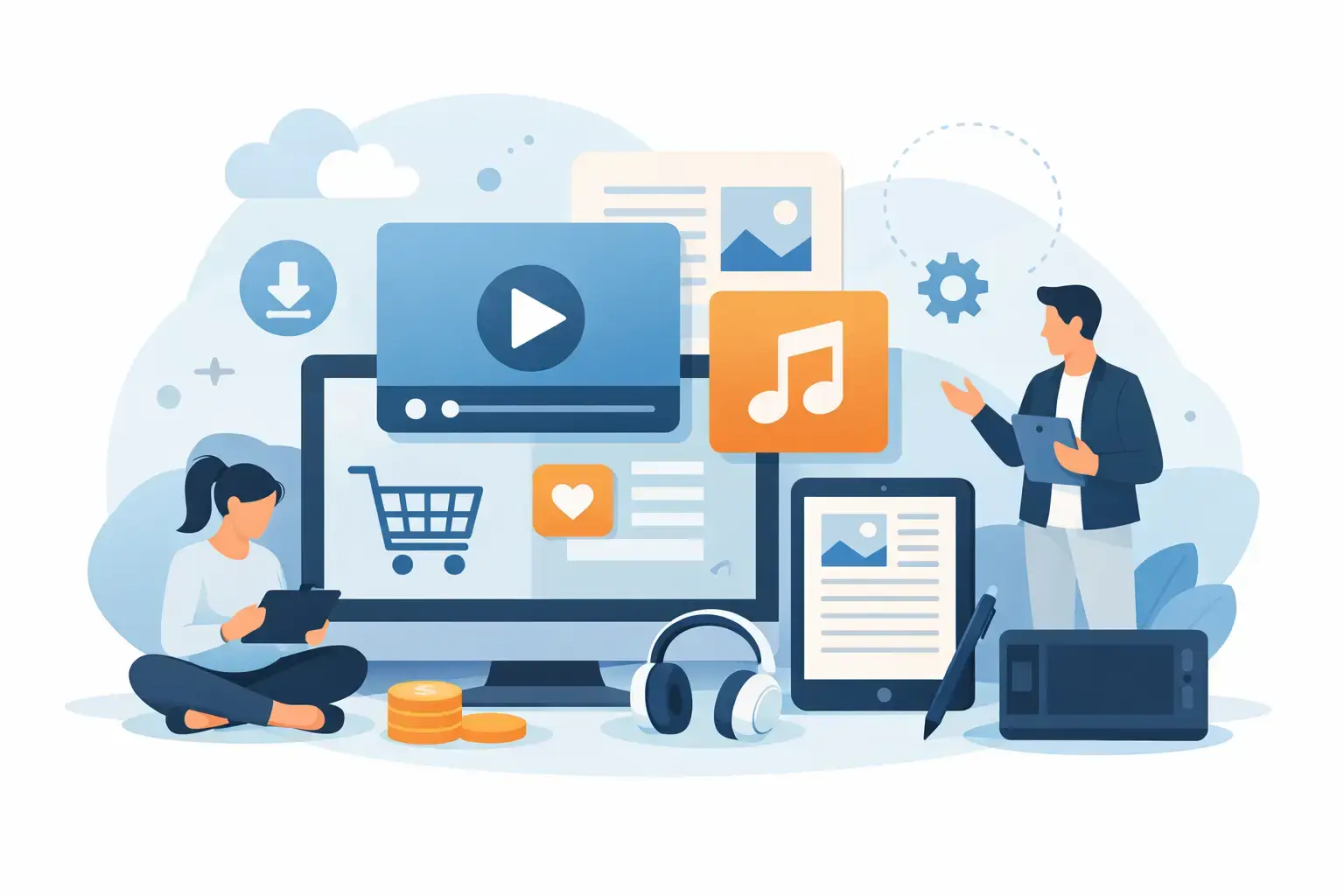
You buy them in seconds, download them right away, and usually never touch a shipping box. That is the simplest way to understand what are digital products: items delivered electronically instead of physically. For gamers, that can mean cheat software, spoofers, overlays, private access keys, config files, subscriptions, or other tools that are activated online and used instantly.
The reason this category matters is simple. Digital products are fast, scalable, and built for users who want immediate access. If you are buying a game enhancement tool or any kind of software-based service, you are not ordering inventory from a warehouse. You are paying for code, access, convenience, and performance.
What are digital products in simple terms?
A digital product is any product that exists in digital form and is delivered through the internet or software activation. It is not a physical object. You do not need shipping, storage shelves, or a printed manual to use it. Instead, you get a file, a login, a license key, a download, or access to a hosted service.
That sounds broad because it is. Ebooks, templates, music files, online courses, plugins, and game tools all fit the same core definition. The format changes, but the structure is similar: the product is created once, distributed digitally, and used on a device.
For gaming audiences, digital products often feel more practical than traditional software boxes ever did. You purchase, receive delivery, install, and start using the product the same day. That speed is a major part of the value.
The main types of digital products
Not every digital product works the same way. Some are downloadable files. Others are account-based services. Some are one-time purchases, while others run on subscriptions because they need updates, maintenance, or live support.
Downloadable software is one of the clearest examples. This includes PC programs, mobile apps, injectors, launchers, utilities, and gaming enhancements. You receive a file or installer, follow setup instructions, and run the product on your own device.
License-based products are also common. In this model, the product may still be downloadable, but access depends on a license key, activation code, or account authorization. This approach gives sellers more control over updates, duration, and user access.
Subscription products are built around ongoing use. Think monthly access to a platform, premium software membership, or a product that stays current through regular patches. In gaming, this often makes sense because software has to keep pace with game updates, anti-cheat changes, and technical fixes.
There are also cloud-based services. With these, the buyer may not receive a traditional file at all. Instead, they get online access to a dashboard, hosted tool, or managed environment. The product still counts as digital because the value is delivered electronically.
Why digital products are different from physical products
The biggest difference is delivery. Physical products need manufacturing, packaging, and shipping. Digital products do not. Once the product is built, it can be delivered to one customer or thousands without the same logistics costs.
That creates clear advantages, but it also changes what buyers should expect. With a physical product, value is often tied to materials and shipping speed. With a digital product, value usually comes from usability, quality, update frequency, security, and customer support.
This is especially true in software categories. Buyers are not just paying for a file. They are paying for the work behind it - development, testing, maintenance, compatibility, and support. If the product depends on staying current, then reliable updates matter as much as the initial download.
There is also less room for confusion when the marketplace is well structured. Good digital sellers make delivery clear, activation simple, and policies easy to understand. That builds trust quickly, which matters when customers expect instant access.
Why gamers buy digital products
Gamers are already used to digital delivery. They download games, patches, mods, expansions, and in-game content all the time. So buying digital tools is a natural extension of behavior that already exists in the market.
The biggest reason is convenience. If you want access today, digital delivery beats waiting. There is no shipping delay, no stock issue in the traditional sense, and no extra friction after checkout when the system is organized properly.
The second reason is function. Many gaming-related products can only exist digitally because they are software-based by nature. A spoofer, cheat, config, or launcher is not something that makes sense as a boxed retail item. It has to be installed, updated, and managed digitally.
The third reason is support and iteration. Good digital products can improve after purchase. Bugs can be fixed. Features can be adjusted. Compatibility can be maintained. For users who care about performance, that flexibility is a real advantage.
Of course, there is a trade-off. Instant delivery does not automatically mean instant success. Some products require setup knowledge, system compatibility, or ongoing maintenance. That is why serious buyers usually look beyond the product label and pay attention to reputation, support, and update history.
What are digital products worth paying for?
That depends on the problem they solve.
A strong digital product saves time, improves results, or gives access to something useful that would be difficult to create on your own. In gaming, that might mean software that works consistently, stays updated, and comes with clear setup guidance. In other categories, it could be education, automation, design assets, or productivity tools.
What separates premium digital products from low-effort ones is usually not the file itself. It is the full experience around it. Stable performance, fast delivery, straightforward instructions, secure checkout, and responsive support all affect whether the purchase feels worth it.
This is where a trusted marketplace matters. If a platform offers organized categories, clear product information, secure payment methods, and real support, buyers can move faster with less hesitation. That is a big reason structured digital storefronts tend to outperform random file sellers.
How digital products are sold
Most digital products are sold through direct storefronts, marketplaces, membership platforms, or private communities. The buyer completes checkout, then receives access through a download page, account dashboard, email delivery, or license system.
The sales process is usually built around speed. Instead of shipping updates and tracking numbers, the focus is on instant delivery, activation, and onboarding. For buyers, that feels efficient. For sellers, it reduces overhead and allows them to serve more customers without physical distribution.
Still, speed alone is not enough. The best digital storefronts also reduce risk by explaining what the product is, how it works, what the buyer receives, and what support is available after purchase. If those details are missing, even a good product can feel unreliable.
For software-driven products, post-sale service matters more than many first-time buyers expect. Updates, troubleshooting, and access management are part of the product experience, not extras. That is one reason brands in this space often emphasize trusted service and 24/7 support.
What buyers should look for before purchasing
If you are buying any digital product, especially software, start with clarity. You should know exactly what you are getting, how it is delivered, and whether it fits your setup. Vague descriptions are a red flag.
Next, check how access works. Is it a one-time file, a timed license, or a recurring subscription? None of those models are automatically better than the others, but each creates different expectations. A one-time purchase may be fine for static content. A subscription may make more sense for software that needs constant updates.
Support is another major factor. Digital products can fail for ordinary reasons like installation issues, expired access, conflicting software, or game-side changes. When that happens, responsive support is not just a nice bonus. It is part of what you paid for.
Finally, consider the seller's consistency. A platform like Zadeyo, built around organized digital delivery and customer support, reflects what many buyers want from this market: fast access, clear policies, and confidence that the service does not stop at checkout.
The real value behind digital products
When people ask what are digital products, they are often really asking why they matter so much now. The answer is speed, flexibility, and scale. Digital products fit how people already buy and use software. They solve problems quickly, they reach users instantly, and they can improve over time.
That does not mean every digital product is worth buying. Some are thrown together, poorly supported, or outdated fast. But when the product is well built and the delivery is handled by a trusted service, digital goods can offer better convenience than physical alternatives ever could.
If you are shopping in this space, think beyond the download itself. The best digital products are not just files. They are working solutions backed by quality, updates, and support when you need it.